

Stolen credentials cause 24% of all breaches according to the Verizon 2024 Data Breach Investigations Report. This makes credential theft prevention crucial now more than ever. Organizations use an average of 100+ digital applications daily, with a 9% increase year-over-year. Each application creates new security weak points.
The security situation keeps getting worse. Credential compromise leads to almost 19% of Business Email Compromise attacks studied in 2024. The problem grows as 25% of this year’s malware specifically targets user credentials. Credential harvesting has become so advanced that GitHub users exposed 12.8 million authentication secrets accidentally in public repositories during 2023. The 2023 Verizon report shows that stolen credentials played a role in 49% of breaches. This explains why 97% of security professionals worry about credential theft.
We’ll break down simple yet powerful ways to protect your digital identity from sophisticated attacks. The discussion covers the changing nature of credential theft and practical prevention steps. This piece will give you the knowledge to protect your valuable digital assets in 2025.
Understanding Credential Theft in 2025
Cybercriminals have changed their tactics over the last several years. They’ve moved away from flashy ransomware attacks to quieter but equally harmful methods. Credential theft now leads cyber threats, making it crucial for people and organizations to grasp how it works.
What is credential theft?
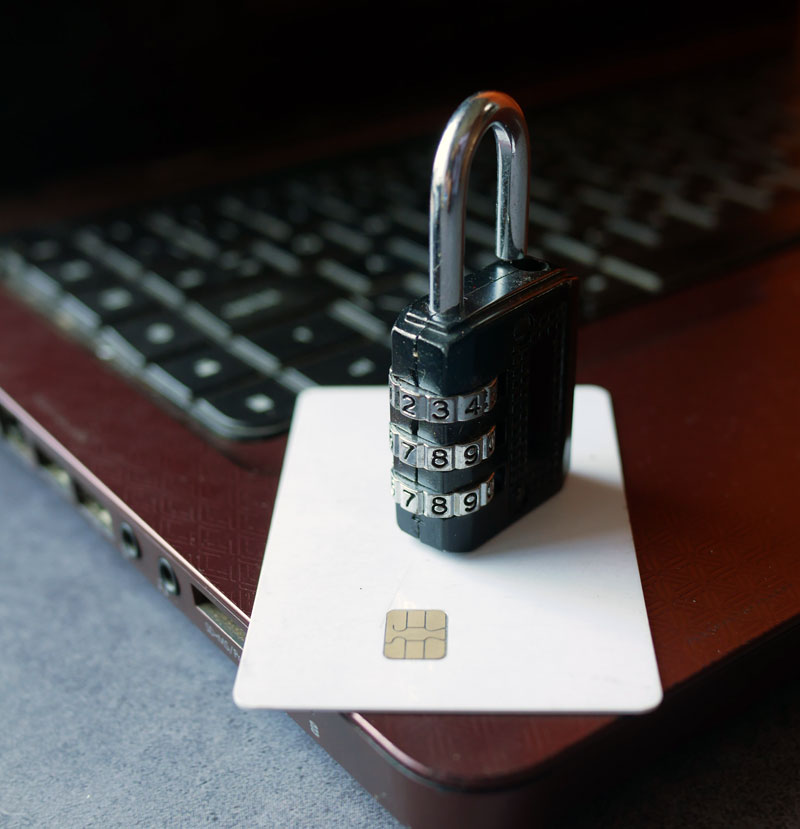 Credential theft happens when someone steals your authentication information like usernames, passwords, API keys, and other login details. Unlike attacks you can easily spot, credential theft works quietly. Victims often don’t know their digital identity has been stolen until serious damage occurs.
This type of cybercrime is the life-blood of many attack strategies. Stolen credentials let attackers pose as real users, which makes them very hard to detect. Bad actors can then slip through networks, grab sensitive data, or plant malware—all while looking like authorized users.
Today’s credential theft goes beyond just stealing passwords. Attackers target many types of authentication, including:
- Browser-stored login information
- Password manager vaults
- Authentication tokens
- Security question answers
- Biometric data
- Cloud service credentials
Credential theft vs credential compromise
People often mix these terms up, but they mean different things. Credential theft is the actual act of stealing login information. Credential compromise describes what happens when unauthorized people get access to and maybe use these credentials.
It also helps to know the subtle but key differences between leaked and compromised credentials:
- Leaked credentials get exposed through data breaches, misconfigurations, or accidental sharing but might not be used yet
- Compromised credentials are already being used by bad actors to cause harm
This difference matters because credentials only become truly compromised once attackers exploit them. All the same, any leaked credential poses a big security risk that needs fixing right away.
Why it’s still a top threat in 2025
People know more about credential theft now, but it still rules the threat landscape. IBM’s X-Force saw an 84% jump in emails carrying infostealers in 2024 compared to the year before. Early 2025 numbers show an even bigger 180% increase from 2023.
The numbers are huge—credential theft shows up in one of every three security incidents and causes 22% of all breaches. Attackers love credential theft because it works well and makes money. The huge number of stolen credentials available shows a booming underground market that keeps growing.
Security experts have also found three times more malware that targets credential stores like password managers and saved browser logins. This shows how cybercriminals now focus on getting your most valuable digital assets—your login details.
The scariest part might be how credential theft gives attackers a quiet way into organizations. Ransomware makes itself known with encryption and demands, but credential theft lets attackers quietly take sensitive information while barely leaving a trace. This sneaky approach makes credential theft especially dangerous in today’s security world.
How Credentials Are Stolen Today
Cybercriminals use increasingly sophisticated methods to steal credentials these days. Let’s get into the main techniques they used in 2025 to compromise digital identities.
Phishing and spear phishing
 We noticed that credential harvesting happens mostly through phishing, which makes up nearly 70% of all email-based cyberattacks. Attackers send deceptive messages that look like they’re from trusted sources with links to fake websites mimicking legitimate login pages. Users enter their credentials, and attackers capture this information without raising any red flags.
Spear phishing takes this a step further by zeroing in on specific individuals with tailored messages. These attacks are sophisticated and look legitimate because attackers include details about your job title, work relationships, and lifestyle information. IBM X-Force data shows an 84% increase in infostealers through phishing emails in 2024 compared to 2023. The numbers are even more concerning in early 2025, showing a staggering 180% jump over 2023 levels.
Malware and keyloggers
Keyloggers silently record everything typed on your device, which makes them excellent tools for credential theft. They run quietly in the background and capture usernames, passwords, credit card details, and other sensitive information. Unlike other malware types, keyloggers don’t harm your computer—they just collect valuable data.
Advanced keyloggers can spot patterns in keystrokes, which helps them identify when you’re typing credentials. Some versions, such as DarkHotel, target insecure hotel Wi-Fi networks. These keyloggers delete themselves after recording enough keystrokes to stay hidden.
Brute-force and credential stuffing
Brute force attacks try every possible username and password combination until they crack the right one. Credential stuffing works differently – it uses stolen credentials from one service to try logging into other platforms. This works because people often reuse passwords.
The success rate of credential stuffing sits between 0.1-1%, but the massive scale makes it work. Millions of credential sets are available on the dark web, so even this tiny percentage leads to thousands of compromised accounts.
Man-in-the-middle attacks
Attackers place themselves between users and applications to intercept communications and steal personal information. This happens in two stages: first, they intercept data through IP spoofing, ARP spoofing, or DNS spoofing. Then they decrypt it using HTTPS spoofing or SSL stripping.
This approach lets attackers grab sensitive data including authentication tokens, so they can access systems while looking like real users.
OAuth and fake apps
Rather than stealing passwords directly, attackers now abuse OAuth—a token-based authentication protocol. They trick users into authorizing malicious apps and get access tokens with extensive permissions.
Microsoft tracked one threat actor who created about 17,000 malicious OAuth applications across different tenants. These apps asked for permission to read emails, send phishing messages, and access sensitive information. OAuth tokens stay valid even after password changes unless someone explicitly revokes them.
SIM swapping and social engineering
SIM swapping moves a victim’s phone number to an attacker’s SIM card. This lets them intercept calls and text messages—including two-factor authentication codes. FBI data shows SIM swapping complaints jumped from 320 between 2018-2020 (with $12 million in losses) to 1,611 in 2021 (with losses of $68 million).
Attackers usually find personal information about targets on social media or the dark web. They call mobile carriers pretending to be someone who lost or damaged their SIM card. Some attackers pay mobile carrier insiders to make these swaps. Since many services use SMS to verify password resets, one successful SIM swap can compromise multiple accounts at once.
These techniques show why credential theft prevention matters so much today.
The Real-World Impact of Credential Theft
Credential theft creates devastating ground consequences that affect organizations and you. These effects go way beyond simple inconvenience. They hit financial health, customer relationships and create dangerous ripple effects throughout the digital ecosystem.
Data breaches and financial loss
Stolen credentials open the door to devastating data breaches. They show up in about 49% of all breach incidents. The financial damage keeps growing – data breaches now cost USD 4.88 million on average in 2024, up 10% from last year.
Recent cases paint a stark picture. A single stolen password led to the 2021 Colonial Pipeline attack, forcing a USD 4.40 million ransom payment. The 2024 Change Healthcare breach used stolen credentials and caused USD 872 million in damages. Small businesses aren’t safe either. Companies with fewer than 500 employees face average breach costs of USD 3.31 million.
Reputation damage and trust erosion
Money isn’t the biggest problem – lost trust hurts more in the long run. About 65% of people stop trusting organizations after a data breach. This breaks customer loyalty fast – 80% of consumers in developed countries will leave a business if their personal data gets exposed.
Companies lose around 9% of their global yearly revenue after data privacy crises. The damage runs deeper than just money. Business partners pull away when they notice increased risks to their own data security. One industry report puts it clearly: “reputational damage can prompt customers to take their business to a competitor whose reputation remains intact“.
Credential harvesting on the dark web
Stolen credentials feed a sophisticated underground economy. The dark web works just like regular online shopping sites. You’ll find:
- Product listings and reviews
- Customer support and refund policies
- Quality ratings based on credential “freshness“
- Specialized brokers who verify and package credentials
This cybercrime economy has exploded. There’s now six times more malware-stolen credentials for sale. Prices range widely – from USD 10 for basic accounts to premium rates for corporate VPNs and financial services credentials. Banking credentials can sell for USD 310,000 per incident. No wonder financial services tops the list of most breached industries.
Simple Yet Effective Prevention Strategies
Your digital identity needs proven defenses against sophisticated credential threats. These five strategies are the foundations of effective credential theft prevention.
Use phishing-resistant MFA
Traditional multi-factor authentication no longer cuts it. Phishing-resistant MFA has become the gold standard for credential security. Standard MFA methods can fall victim to phishing attacks, push bombing, or SIM swapping. However, phishing-resistant options use public key cryptography to verify both the user and destination’s authenticity.
FIDO2 security keys and certificate-based authentication provide substantially stronger protection. They eliminate shared codes that attackers might intercept. The U.S. Office of Management and Budget acknowledges this superiority and now requires phishing-resistant MFA for federal agencies.
Implement strong password policies
Basic password security remains vital even with advanced protection measures. Effective policies should require:
- Length over complexity (at least 16 characters)
- Unique passwords for each account
- Random combinations of characters or passphrases
- Enterprise password managers to support compliance
Regular password audits help maintain policy effectiveness. Mandatory password rotation is no longer recommended because it often creates predictable patterns.
Adopt zero trust and least privilege
Zero trust architecture follows one rule: “never trust, always verify.” It treats every access request as potentially malicious whatever its origin. This approach works perfectly with least privilege, which limits user permissions to role-specific needs.
These frameworks create layered protection that constantly verifies identities and controls access precisely. Organizations using zero trust will grow by 31% by the end of 2023. This growth shows how well it works against credential-based attacks.
Train employees on social engineering
Human error causes 88% of data breaches. This makes complete social engineering training crucial. Effective programs include:
- Regular simulated phishing exercises
- Education on attack types (spear phishing, whaling, pretexting)
- Clear security policies during onboarding
- Engaging refresher training at least monthly
Build a culture where employees take responsibility for security and feel confident to report suspicious activities.
Avoid hardcoded and default credentials
Hardcoded credentials in source code create serious security risks. Hackers and malware exploit them regularly. Default passwords that come with hardware and software give attackers easy access.
System administrators should replace default credentials before network deployment. Developers need password management solutions that detect hardcoded credentials. These solutions should replace them with secure alternatives that enforce rotation and complexity.
How to Detect and Respond to Credential-Based Attacks
Early detection of credential attacks can mean the difference between a minor security incident and a major breach. You need alertness on multiple fronts to spot suspicious activities before attackers cause damage.
Monitor for unusual login behavior
Quick identification of strange authentication patterns starts with behavioral baselines. Look out for these red flags:
- Logins from unfamiliar locations, especially foreign countries
- Login attempts during odd hours like late nights and weekends
- Failed login attempts that lead to successful ones
- Unexpected changes in device fingerprints or browser user-agents
- Unusual access to sensitive resources or admin portals
Historical login data helps machine learning algorithms work better at spotting normal user behavior. This includes analyzing locations, times, and access patterns.
Use identity threat detection tools
Identity Threat Detection and Response (ITDR) solutions guard your identity infrastructure by watching digital identities and systems. These tools scan user activity and access management logs to find compromised accounts, suspicious behavior, and password problems.
Modern ITDR platforms unite multiple security features in one solution. They work with SIEM and SOAR tools to optimize response times. The system automatically adds authentication steps when it spots suspicious behavior, creating dynamic security responses based on immediate risk assessment.
Audit access logs and privilege use
You need detailed logs of all privileged user activities, including command executions, keystrokes, and screen captures. Detailed auditing of authentication events, process access, and file system changes gives you the full picture of account activity.
Automated systems should record and store detailed logs of privileged sessions. They apply behavior analytics to spot anything unusual in normal patterns.
Respond quickly with incident plans
Containment becomes your priority once you detect compromised credentials. A well-laid-out incident response plan should list immediate steps: isolate affected systems, reset victim passwords, and enable multi-factor authentication where possible.
Take away authentication tokens from all impacted accounts. Block associated indicators of compromise in email systems, firewalls, and endpoint protection. Make sure you collect and save forensic data that follows your policies throughout this process.
Conclusion
Credential theft stands as one of the biggest cybersecurity threats that people and organizations face in 2025. In this piece, we get into how stolen credentials now show up in nearly half of all data breaches. These breaches cause financial damages that average $4.88 million per ordeal. Cybercriminals’ tactics keep evolving—from sophisticated phishing campaigns to keyloggers, credential stuffing, and even OAuth token manipulation.
The impact goes way beyond the reach and influence of immediate financial losses. Stolen credentials enter a thriving underground marketplace where criminals trade them like commodities. Companies suffer devastating reputation damage. Studies show 80% of consumers will abandon businesses after a breach exposes their personal information.
Protection remains possible through simple strategies. Phishing-resistant MFA provides much stronger security than traditional authentication methods. Strong password policies combined with zero trust principles and complete employee training create multiple layers of defense against credential-based attacks. Quick detection through behavioral monitoring and identity threat detection tools helps respond before major damage occurs.
Note that credential theft prevention needs watchfulness on multiple fronts. Cybercriminals only need to succeed once, while defenders must protect against countless attack vectors at all times. The strategies outlined in this piece are your best defense against increasingly sophisticated credential theft attempts in 2025 and beyond.
Your digital identity is the gateway to your entire online presence. Protect it with care. Call Econo-Tech for help.
Credential Theft Prevention Made Simple | Blog Article | Econo-Tech | All Rights Reserved | Farmingdale, NY