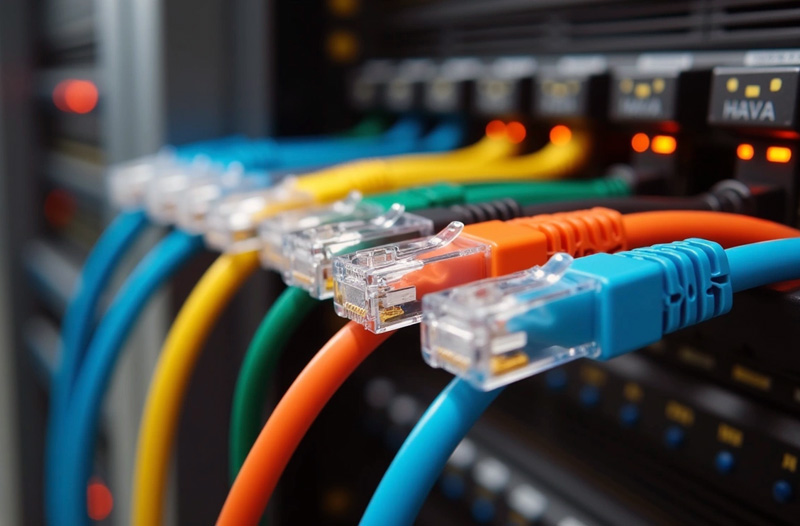

Business Technology Trends 2026: Small businesses can’t afford to ignore cybersecurity anymore. Cyberattacks now target 43% of small businesses, and downtime losses range from $12,000 to $24,000 per hour. These vulnerabilities represent one area where companies must prepare for rapid change as we approach business technology trends in 2026.
Technology trends are accelerating faster than ever. Leading generative AI tools have reached hundreds of millions of users within months. These digital world trends aren’t just impressive – they are reshaping business basics. The year 2026 marks a fundamental change from testing technological breakthroughs to delivering measurable business results.
This piece explores the most important technological trends that proactive companies already implement. Companies need to know about preemptive AI-powered cybersecurity that blocks threats before they strike, as well as autonomous, immediate decision-making systems. These capabilities help businesses compete effectively in an era where disruption is accelerating, and AI is becoming essential.
Business Technology Trends: Cybersecurity is Now a Business Essential
Cybercrime losses will hit USD 10.50 trillion in 2025. Cybersecurity has become crucial for business survival. Small and medium-sized businesses now face almost half of all cyberattacks worldwide. This reality has changed how companies need to protect themselves in the digital world in 2026.
Why small and mid-sized businesses are prime targets
Criminals have turned their attention to smaller organizations. These businesses often have valuable data but lack strong defenses. The FBI reports that business  Email compromise alone caused losses of over USD 2.70 billion. This shows just one of many threats smaller companies face. SMBs become targets because they handle sensitive information with limited security resources.
The stakes are high. Three-fourths of small businesses say a major cyberattack would put them out of business. The financial damage keeps growing. A data breach now costs USD 4.40 million globally and USD 10.00 million in the United States.
Supply chain accountability has altered the map of security. Small vendors must meet their enterprise partners’ compliance standards. This creates challenges but also opportunities for businesses that show strong security practices.
Key cybersecurity practices for 2026
CISA (Cybersecurity and Infrastructure Security Agency) recommends eight essential practices that are the foundations of business cybersecurity in 2026:
- Teach employees to avoid phishing – Staff training to spot suspicious activity remains essential as phishing continues to be a main attack vector
- Require strong passwords – Password policies need 16+ characters and unique credentials for each account
- Implement phishing-resistant MFA – Multifactor authentication, especially with security keys, provides critical protection
- Update business software promptly – Focus on patching known exploited vulnerabilities instead of following calendar-based schedules
- Use logging on business systems – System monitoring helps catch threats early
- Back up business data – Create immutable backups with isolated credentials and test restores regularly
- Encrypt business data – Keep information protected even if stolen
- Report cyber incidents – Share threat information with CISA to help everyone stay ahead of evolving threats
Companies must prove these fundamentals work through testing and documentation. Having policies alone isn’t enough anymore.
How AI is changing the threat landscape
AI has grown from a concern to a central force that’s changing cybersecurity. Attackers now use AI to create convincing phishing campaigns, improve reconnaissance, and develop evasive malware. The gap between “vulnerable” and “compromised” systems has shrunk. Autonomous agents can find and exploit security weaknesses faster than ever.
Security professionals report that 87% of organizations faced an AI-driven cyberattack last year. More than 90% expect these attacks to increase. AI-powered attacks cost more than traditional methods, creating an urgent need for advanced defenses.
The good news is that defensive AI applications keep improving. These include immediate behavioral monitoring, predictive risk scoring, and AI-arranged security operations platforms. Organizations that welcome these technological trends in business security can reduce risk and build resilience against evolving threats.
AI Adoption: From Experimentation to Execution
The experimental AI era has come to an end. Businesses have moved from AI curiosity to strategic execution in 2026. Most organizations (91%) have implemented or plan to implement both generative and agentic AI within the next 12 months. This marks a fundamental change in company operations.
Agentic AI and its business applications
Agentic AI has become a game-changer for enterprises. These systems can take initiative and perform complex tasks with minimal supervision. AI agents now revolutionize high-value workflows across critical business functions. They handle demand forecasting, hyper-personalization, product design, and internal operations like finance, HR, IT, and audit.
Successful deployment needs strategic focus. Leading companies let their leadership pick specific areas for concentrated AI investments. These choices line up with business priorities, proven AI value, and available talent and data. The mandate has moved from broad experimentation to targeted execution.
Technology budget allocations reflect this change. The percentage for AI will jump from 8% to 13% over the next two years. Tech leaders (70%) plan to grow their teams because of generative AI. This signals a move from job displacement fears to mutually beneficial growth.
How to measure real ROI from AI tools
Real AI returns come from evaluating three core dimensions: efficiency gains, quality improvements, and strategic benefits. Companies that see genuine ROI have set concrete standards. These track business-relevant value – financial (P&L impact), operational (market differentiation), or workforce-related.
Here are practical measurement approaches:
- Set clear pre-AI baselines for comparison
- Use impact chaining to trace AI’s contribution through downstream effects
- Calculate risk-adjusted ROI that accounts for total cost of ownership
- Measure both “hard ROI” (tangible metrics) and “squishy ROI” (cultural shifts)
Smart organizations look beyond simple cost savings. They track saved time (often 5 hours per week per professional), reduced errors, lower risks, and better efficiency. Intangible benefits matter too – improved accuracy, better client experience, higher decision quality, and talent retention.
Avoiding the trap of automating broken processes
Companies often make a critical mistake – they try to automate existing processes without redesigning them first. An expert puts it well: “AI won’t fix broken processes – they increase them. A flawed workflow plus automation is just a faster, more expensive flaw”.
General Motors offers a cautionary tale. They used AI to design an innovative seat bracket – 40% lighter and 20% stronger. Yet, the part never reached production because GM’s manufacturing system couldn’t handle the AI-generated design.
Smart companies reimagine their processes completely instead of just adding AI to existing workflows. They know AI doesn’t create efficiency—it reveals inefficiency. Companies must fix their “process debt” before deploying virtual agents or predictive models. This debt includes outdated workflows and human workarounds that quietly run daily operations.
Companies that clean up their processes first see better results. They establish clear logic, standardize decision frameworks, and create a single source of truth. Only then can AI tap into its full transformative potential as organizations move from experimentation to enterprise-wide execution.
Connectivity and Infrastructure: The Backbone of Digital Transformation
Network reliability serves as the backbone of all business technology in 2026. Companies that aim to transform digitally know that network uptime means more than IT maintenance. It directly affects revenue, customer satisfaction, and daily operations.
Why uptime matters more than ever
Business operations today need constant connectivity. Network disruptions can spell disaster. Small businesses lose between USD 12,000 to USD 24,000 every hour during outages. Money isn’t the only concern. Downtime hurts company reputation, reduces staff motivation, creates security risks, and might result in regulatory penalties.
Numbers tell the story clearly. Network reliability tops the list for 86% of IT leaders building data center networks. This ranks higher than integration ease at 82% and operational simplicity at 74%. Only 3% of leaders mentioned cost as their main concern.
These priorities make sense. A single hour of unexpected downtime would disrupt critical internal workflows for 80% of organizations. At the same time, 74% would face major customer service issues. The situation becomes more concerning as 74% of companies faced at least one major data center outage last year.
The rise of converged networks
Network convergence stands out as one of the biggest changes in business infrastructure. This means voice, data, and video services join into one network architecture. Companies now choose single-provider solutions that handle all communication needs instead of managing separate systems.
The advantages go beyond making things simpler. Converged networks provide:
- Better performance and reliability
- Budget-friendly savings from reduced overhead
- Quick scaling to meet business needs
- Better security through unified protection
- Smart resource use
A restaurant group called Monjuni’s and the Silver Star, with 11 locations, needed reliable connectivity at multiple sites. They chose converged solutions that combined dedicated internet service with wireless backup. This helped them handle reservations and carry-out orders without interruption.
Edge computing and real-time data processing
Edge computing brings another radical alteration in business technology. It moves computation closer to data sources instead of using distant cloud centers. This helps process more data faster and produces real-time results.
Some operations need split-second decisions. Autonomous vehicles and industrial automation can’t afford delays. Edge computing removes network lag that might affect these operations. Companies can process data on-site. This means critical applications work even during network problems.
Edge computing differs from traditional cloud systems. It creates a spread-out structure that handles sensitive data where it originates. This cuts down transmission risks and costs while speeding up response times. Healthcare facilities and production floors benefit greatly from this technology where every second counts.
Cloud Strategy: More Than Just Storage
Cloud strategy in 2026 has moved way beyond the reach and influence of simple data storage to become a core business necessity. Technology leaders must balance  competing priorities—they need to promote AI adoption and maintain security while dealing with technical debt and directing sovereign IT requirements.
Cloud-native vs hybrid models
Research from Gartner shows 75% of organizations will use hybrid or multi-cloud strategies by 2026. This represents a radical alteration in approach rather than just a technology choice. Hybrid approaches blend on-premises infrastructure with public cloud services to provide control and scalability. This balanced setup delivers key advantages: better availability through distributed workloads, stronger regulatory compliance options, and scalability on demand without major expenses.
Cloud decisions now center on business goals rather than technical details. Cloud providers have switched from saying “here are the primitives” to asking “tell me your intent.” Organizations can specify their policies and service objectives while the cloud automatically builds and protects the stack.
AI-ready cloud platforms
Cloud environments of 2026 serve as smart platforms for AI workloads. Cloud providers now build in agentic AI—autonomous systems that handle data and complete tasks with minimal human input. These platforms offer specialized AI infrastructure that supports everything from machine learning development to inference platforms that run AI agents reliably and safely.
This progress makes sense as companies need unified data access across HR, finance, and sales departments so AI systems can reason effectively. Platforms like Google Cloud, AWS, and Azure now deliver complete AI technologies built on decades of research and development.
Security and compliance in cloud environments
Security has become the top priority as cloud adoption grows. Organizations must direct complex compliance requirements like GDPR, FedRAMP, and HIPAA while building reliable security measures. Success requires a clear grasp of the shared responsibility model, where cloud providers and customers each have specific security duties.
Leading platforms now offer built-in security services, including continuous monitoring, automated compliance checks, and advanced threat detection. For example, Google Cloud’s Secure AI Framework (SAIF) provides specific risk mitigation strategies for AI workloads.
A successful cloud deployment relies on building security into every part of the architecture. Teams should implement zero-trust models, automated compliance reporting, and continuous monitoring as core components rather than afterthoughts.
Building Trust in a Tech-Driven World
Trust has become a crucial business advantage in today’s connected world. Gartner predicts that all but one of these enterprises will have a digital sovereignty strategy by 2030. This shows how control over digital resources directly affects competitive edge.
Digital sovereignty and data control
Digital sovereignty goes way beyond the reach and influence of data location. It includes who runs technology environments, how organizations govern data, and which jurisdiction controls AI models. Smart organizations see this as their path to independence rather than just another compliance requirement. Organizations deal with complex regulations by building sovereign solutions that create AI-ready environments while you retain control of operations. This turns regulation from a burden into an advantage that speeds up market entry and makes compliance easier.
Transparent AI systems and explainability
People need to understand systems to trust them. While 40% of organizations see explainability as a major risk in AI adoption, only 17% work to reduce it. Explainable AI (XAI) gives clear reasons for AI decisions that humans can understand. One expert calls this a “cognitive bridge between human and machine”. This clarity helps with:
- Better user confidence and adoption
- Better AI model performance
- Stronger regulatory compliance
Continuous trust verification and governance
Businesses have moved from “trust, but verify” to continuous authentication models because threats keep evolving. This system checks user identity throughout sessions based on behavior patterns, not just the first login. Organizations now use up-to-the-minute data analysis to verify identities, protect users, and make better decisions. This continuous trust helps enterprises secure digital business faster while balancing security with great user experiences.
Conclusion
The Business Technology Trends landscape of 2026 shows major changes in many areas, and smart companies are already getting ahead of the curve. Cybersecurity isn’t just a tech issue anymore – it’s now crucial to business survival. Small organizations face devastating financial hits from cyberattacks. We need strong security measures to deal with AI-powered threats that can exploit vulnerabilities almost instantly.
The AI world has grown substantially. Companies no longer just experiment with AI – they use it to get real business results. Success comes from picking the right processes where AI can make a big difference, rather than trying everything at once. But organizations should avoid automating processes that don’t work well. AI makes existing processes more powerful, so you need to fix them before adding AI.
Every digital change depends on solid connectivity. Network downtime can cost big money, making reliable networks vital to the whole business, not just IT. So companies now choose unified networks and edge computing. These solutions process data in real-time and keep things running even when problems hit.
Cloud strategy goes way beyond storage these days. Most companies use hybrid or multiple clouds to balance control and growth while supporting AI workloads. Business goals now drive cloud decisions instead of technical specs. Platforms automatically build and protect tech stacks based on what organizations need.
Trust has become the most valuable asset in our tech-driven world. Companies can stay independent and build customer confidence through digital sovereignty, clear AI systems, and constant verification. Of course, organizations that balance new tech with trustworthiness will do well in this new era.
Tech keeps changing faster than ever. But companies that get these basics right will succeed despite the chaos. They need to treat cybersecurity as vital, use AI wisely, maintain reliable networks, develop complete cloud strategies, and build trust. Winners won’t just use these technologies – they’ll weave them into business strategies that deliver real results in 2026 and beyond.
Business Technology Trends | Blog Article | Econo-Tech | All rights Reserved | Farmingdale, NY