Business PC vs. Gaming PC: What’s the Difference?
Business PC vs. Gaming PC: When shopping for a new computer, you may notice that manufacturers separate their systems into categories such as business PCs and gaming PCs. While both types of computers can handle everyday tasks such as browsing the internet, checking email, creating documents, and watching videos, they are designed with very different priorities in mind. Understanding the difference between a business PC and a gaming PC can help you choose the right computer for your needs and avoid spending money on features you may never use.
What Is a Business PC?
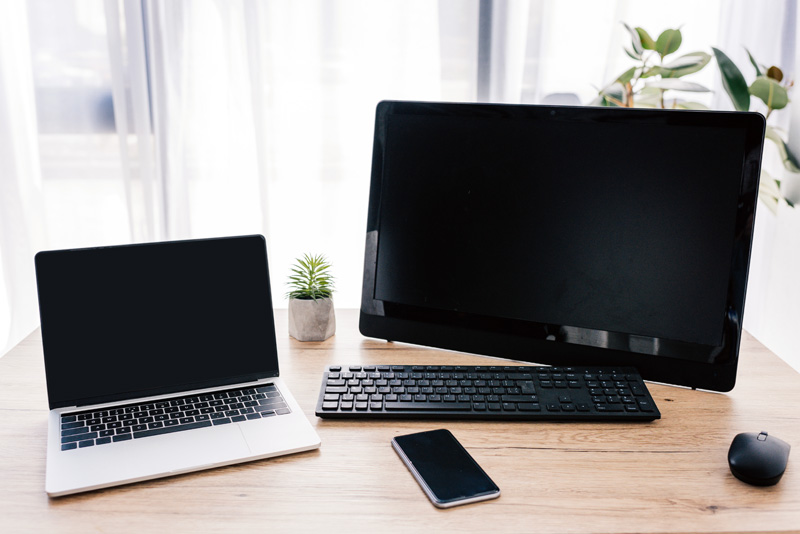
A business PC is designed primarily for productivity, reliability, security, and long-term use. These computers are commonly found in offices, small businesses, schools, medical practices, and home offices. Business computers are typically built to handle applications such as Microsoft Office, accounting software, and software to run daily business tasks.
One of the biggest advantages of a business PC is reliability. Business-class computers are often designed to operate consistently for many hours each day. Manufacturers may also provide better warranty options, business support, and longer-term availability of specific models.
Security is another major consideration. Business PCs may include features such as hardware-based security technologies, fingerprint readers, smart-card support, TPM security chips, and additional tools for managing computers across an organization.
Business computers also tend to have a more conservative appearance. Many use compact cases and integrated graphics rather than large cases filled with RGB lighting, gaming fans, and oversized graphics cards.
What Is a Gaming PC?
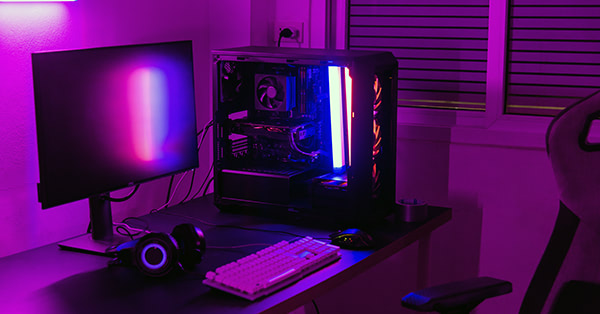
A gaming PC is designed to deliver high performance, particularly for modern computer games. Gaming systems place a much greater emphasis on graphics processing, fast processors, high-speed memory, cooling, and performance.
One of the most important components in a gaming PC is the graphics processing unit (GPU). A powerful graphics card allows games to display detailed environments and reduce lag time.
Gaming PCs also commonly feature powerful CPUs, larger amounts of RAM, high-speed solid-state drives, improved cooling systems, and power supplies capable of supporting high-performance components.
Many gaming computers also have distinctive cases with tempered-glass panels, customizable RGB lighting, multiple cooling fans, and other features designed to appeal to gamers.
Performance Differences
The biggest difference between the two types of computers is how performance is prioritized.
A business PC generally focuses on getting work done efficiently. For example, a business user may need to have a web browser, email, accounting software, spreadsheets, and several documents open simultaneously. A modern processor with sufficient RAM and a fast SSD can handle these tasks very well.
A gaming PC is designed for workloads that can push the CPU and GPU much harder. Modern games can require significant graphics processing power, particularly when playing at 1440p or 4K resolution.
That extra performance can also benefit people who edit videos, create 3D graphics, work with large multimedia projects, or use other demanding software.
Storage and Memory
Both business and gaming PCs can use solid-state drives; however, gaming PCs often include larger, faster storage devices. Modern games can require hundreds of gigabytes of space.
RAM requirements can also vary. A business PC may work perfectly well with 16GB of RAM for typical office tasks. A gaming PC may use 16GB, 32GB, or more depending on the games and applications being used.
Which One Should You Buy?
The best choice depends on what you plan to do with the computer.
A business PC is usually the better choice if you primarily need a computer for:
- Email and internet browsing
- Microsoft Office and productivity software
- Accounting and bookkeeping
- Business applications
- Video meetings
- Customer management software
- Document creation
- General office work
A gaming PC may be the better option if you need a computer for:
- Modern PC gaming
- Video editing
- 3D rendering
- Graphic-intensive applications
- Streaming
- High-resolution gaming
- Other demanding workloads
Can a Business PC Be Used for Gaming?
Yes, but there are limitations. Some business PCs have capable processors and enough RAM to run less-demanding games. However, many business systems use integrated graphics rather than a dedicated gaming GPU.
If gaming is an important requirement, purchasing a gaming PC or a computer designed with a dedicated graphics card will generally provide a much better experience.
Can a Gaming PC Be Used for Business?
Absolutely. A gaming PC can perform business tasks extremely well, especially in Graphic Design and CAD industries. The downside is that you may pay considerably more for performance and features that aren’t necessary for basic office work.
Conclusion
The difference between a business PC and a gaming PC comes down to purpose. Business systems are made for reliability, security, and office productivity. Gaming computers are built for fast graphics and CPU cooling for faster performance and less lag.
If you are purchasing a computer for email, office applications, accounting, and everyday business tasks, a quality business PC may be the smarter investment.
Before purchasing, consider what software you use, how much performance you actually need, your budget, and how long you expect the computer to last. Choosing a computer based on your actual workload rather than simply buying the most powerful system can save money while still giving you the performance you need.
Business PC vs. Gaming PC | Blog Article | Econo-Tech Computers | All Rights Reserved | Long Island NY