
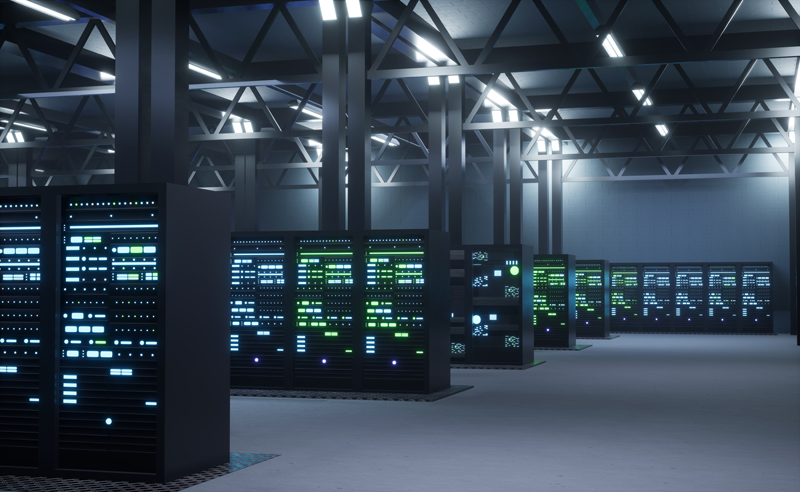
Data Center Energy Consumption: In 2023, data centers in the United States used 176 terawatt-hours of electricity, making up 4.4% of the country’s total annual use. That amount could power 16 million homes for a year. Looking ahead, experts predict that data center energy use could double or even triple by 2028, possibly reaching up to 12% of U.S. electricity demand [-5]. This article will examine current data center power statistics, compare usage across different types of facilities, examine the impact of AI on energy needs, and highlight trends shaping our energy future.
Current Data Center Energy Consumption Statistics
Global data center energy consumption in 2024
In 2024, data centers worldwide used about 415 terawatt-hours of electricity, roughly 1.5% of global electricity use. The industry has been growing steadily, with data center electricity demand rising by 12% each year over the past five years. In 2025, data center electricity use jumped by about 17%, while overall global electricity demand increased by just 3%.
The International Energy Agency (IEA) expects global data center electricity use to reach as much as 1,000 terawatt-hours by the end of 2026, and about 1,980 terawatt-hours by 2030. These estimates include the rapid growth of AI technology.
AI is changing how much electricity data centers use. Right now, AI makes up 5% to 15% of a data center’s power use, and this share is expected to grow by 35% to 50% by 2030.
United States data center power demand breakdown
In 2025, U.S. data centers used 183 terawatt-hours of electricity, which was over 4% of the nation’s total. That year, data centers were responsible for about half of the growth in electricity demand. The IEA expects data centers to keep making up half of the increase in U.S. electricity demand through 2030. The Electric Power Research Institute estimates that data centers could grow to consume up to 9% of U.S. electricity generation annually by 2030, up from 4% in 2023. U.S. data center electricity usage should rise from 4% to 7.8% of regional consumption between 2025 and 2030. Grid power demand for U.S. data centers will increase by 22% in 2025 to reach 61.8 gigawatts, then expand to 75.8 gigawatts in 2026, 108 gigawatts in 2028, and 134.4 gigawatts in 2030.
How much power do data centers use by region?
Regional concentration. Data center power demand is not spread evenly across the country. In 2023, just 15 states accounted for 80% of U.S. data center electricity use. Virginia stands out, with data centers using 26% of the state’s electricity that year. Northern Virginia’s Data Center Alley has over 100 facilities and more than 5 gigawatts of power. With data center demand reaching approximately 9.7 gigawatts in 2025, up from less than 8 gigawatts in 2024. Oregon follows with over 4 gigawatts of data center demand by the end of 2025, up from 3.5 gigawatts in 2024. Other states with considerable data center electricity consumption include North Dakota at 15%, Nebraska at 12%, and Iowa at 11% of their respective total electricity supplies.
Internationally, Ireland stands out, with data centers accounting for about 21% of the country’s electricity use. The IEA expects this could rise to 32% by the end of 2026. In Dublin, data centers make up 79% of electricity use. Across Europe, data center electricity use is expected to grow from 2.7% to 5% between 2026 and 2030.
Year-over-year growth trends
By the end of 2024, data centers under construction in North America had a combined computing capacity of 6,350 megawatts, more than twice that of the year before. In 2025, global data center construction attracted over $61 billion in investment, with the U.S. and Canada accounting for more than $47 billion of that total.
China and the United States are expected to drive almost 80% of the growth in global data center electricity use through 2030. U.S. consumption will rise by about 240 terawatt-hours (a 130% increase) compared to 2024, while China’s will grow by around 175 terawatt-hours (a 170% increase). Europe is set to grow by more than 45 terawatt-hours (up 70%), and Japan by about 15 terawatt-hours (up 80%).
What Drives Data Center Energy Consumption
IT equipment and server loads
Servers are the main source of power consumption in data centers, accounting for about 60% of electricity use in modern facilities, though this can vary by type. Computing equipment runs continuously to process and store data, so servers are the largest single energy users in any data center. A November 2024 report found that computing power and server systems together account for about 40% of electricity use.
Modern processors in data centers need a lot of energy. In early 2025, CPUs had average thermal design power (TDP) ratings of 150 to 350 watts. Advanced GPUs require even more power, with TDPs ranging from 350 to 700 watts. Servers using these GPUs, especially for AI, are expected to use 30% more electricity each year, while traditional servers increase their use by about 9% per year.
Servers consume an estimated 40% of total data center power use. More powerful hardware draws more electricity, but compensates with greater efficiency than previous generations. Storage systems account for around 5% of electricity consumption, and the move toward solid-state drives uses far less power than legacy hard disk drives.
Cooling systems and thermal management
Cooling is the second-largest energy use in data centers, after computing equipment. According to McKinsey, cooling makes up nearly 40% of total data center energy use. This share varies with facility efficiency, ranging from about 7% in efficient hyperscale centers to over 30% in less efficient enterprise centers.
Servers need to stay within specific temperature limits to operate reliably and avoid downtime. For every kilowatt used by IT equipment, another 200 to 600 watts are needed for cooling. This extra energy is measured by Power Usage Effectiveness (PUE), which is the ratio of total facility energy to IT equipment energy. Data centers aim for a PUE of 1.0, which represents perfect efficiency, but the average is currently 1.55. The most efficient large hyperscale centers have a PUE of 1.2, while others have a PUE above 1.6.
Cooling technology choice affects efficiency a lot. A study by the American Society. The type of cooling technology used makes a big difference in efficiency. A study by the American Society of Mechanical Engineers found that switching from all-air cooling to mostly liquid cooling reduced facility power use by 27% and overall data center energy use by 15.5%. Liquid cooling is more efficient than air cooling, especially for high-density IT racks. Losses account for 10% to 12% of a data center’s total energy consumption on average. Power distribution systems with Uninterruptible Power Supplies and backup generators consume 10% to 15% of total electricity. These systems ensure continuous operation during power outages but incur efficiency losses due to power conversion and battery charging.
UPS systems maintain steady power during outages and protect sensitive equipment from power fluctuations. Newer, energy-efficient UPS models are 92% to 95% efficient, while older ones are less than 90% efficient. ENERGY STAR-certified UPS systems can reduce energy losses by 30% to 55% compared to standard models. For example, a 1,000 kVA UPS in a large data center could save $18,000 per year.
Network equipment and storage devices
Network infrastructure accounts for only 5% of total data center power. Networking equipment has switches to connect devices within the facility and routers to direct traffic. Load balancers optimize performance and account for up to 5% of electricity demand. Storage devices consume a negligible amount of data center power, and the number of devices has decreased as capacity has increased.
AI Data Center Power Consumption: The New Reality
Traditional vs. AI workload energy requirements
Artificial intelligence workloads differ from conventional data center operations in both intensity and consistency. For example, a five-acre data center equipped with traditional CPUs may consume 5 megawatts, whereas integrating GPUs in the same facility can increase power requirements to 50 megawatts. AI operations require continuous, maximum-capacity performance, unlike the cyclical, predictable peaks typical of standard computing.
AI-specific servers consumed an estimated 53-76 terawatt-hours in 2024. Projections range from 165 to 326 terawatt-hours by 2028. This explosive growth stems from how AI models process information. Training a single large language model can consume hundreds of megawatt-hours of electricity and rely on dense GPU clusters that operate continuously for weeks.
GPU and accelerated server power needs
Modern GPUs consume 700-1,200 watts per chip. Traditional CPUs use 150-200 watts. The architectural difference explains this disparity. CPUs excel at sequential processing with 8 to 128 cores in server configurations. GPUs contain thousands of smaller cores designed for the parallel operations required by AI workloads.
Rack-level power density tells an even more dramatic story. Traditional CPU-based racks consumed 5-15 kilowatts just five years ago. AI data centers need 50-150 kilowatts per rack. NVIDIA’s 2024 Oberon system operates as a unified server with 144 GPUs, requiring 10 times the power of previous designs. The 2027 Kyber system will need 600 kilowatts per rack, equivalent to powering 500 U.S. homes in a filing cabinet-sized space. Public roadmaps from leading technology companies already target 1 megawatt per rack.
A typical AI server rack with eight GPUs needs 10-12 kilowatts just for the servers. This excludes networking equipment, storage, and cooling infrastructure. Despite higher absolute consumption, GPUs deliver superior energy efficiency for AI tasks. Applications accelerated by GPUs show 5x average energy efficiency gains compared to CPU-only systems.
Training large language models: energy effect
Training GPT-3 consumed 1,287 megawatt-hours and produced over 552 tons of carbon emissions. GPT-4 required more than 40 times as much electricity as GPT-3. Training GPT-5, estimated at 52.5 trillion parameters using 50,000 H100 GPUs that ran for 90 days, consumed 55-60 gigawatt-hours. Applying a Power Usage Effectiveness of 1.2 increases training energy to 72 gigawatt-hours.
But inference now dominates the energy landscape. Research shows that over 80% of AI compute is used for inference rather than training. Meta estimates inference accounts for 65% of their carbon footprint. Google attributes 60% of energy consumption to inference versus 40% for training. The industry produces 90% of notable AI models, and inference consumes 80-90% of all AI computing power.
AI inference and ongoing operational costs
Per-query energy varies by task complexity. Text generation ranges from 0.03 watt-hours for simple queries to 1.9 watt-hours for complex reasoning. The median Gemini Apps text prompt uses 0.24 watt-hours. Image generation requires 0.6-1.2 watt-hours, equivalent to charging a smartphone fully. Video generation consumes nearly 1 kilowatt-hour per 5-second clip, over 800 times as much as high-quality images.
These numbers compound at scale. ChatGPT serves 2.5 billion prompts per day. Running GPT-5 is estimated to consume 850 megawatt-hours daily and reach 75 gigawatt-hours over 90 days. Processing a million tokens emits carbon like driving a gas-powered vehicle 5 to 20 miles.
Google achieved remarkable efficiency gains through full-stack optimization. Over a 12-month period, the energy and carbon footprint of the median Gemini text prompt dropped by 33x and 44x. Simple steps can shave 10% to 20% off global data center electricity needs.
Average Data Center Energy Consumption by Type and Size
Facility size and operational model determine data center power consumption patterns more than any other factor. How much power data centers use requires dissecting distinct categories that range from small internal facilities to massive hyperscale operations.
Small and medium enterprise data centers
A single small data center requires 500 kilowatts to 2 megawatts of electricity at any given moment. A small facility consumes between 4,380 and 17,520 megawatt-hours per year with continuous operation. These centers serve small businesses, government agencies, and larger corporations. They account for roughly half of all servers but only 10% of total data center load.
Small data centers within office or research buildings split energy consumption evenly. Roughly 50% goes to IT physical machines and 50% to cooling and power supply. The Power Usage Effectiveness reaches 2 for facilities having less than 150 square feet of floor space. Bigger enterprise data centers owned by single large companies for exclusive use account for another 20% to 30% of the total data center load.
Colocation and cloud computing facilities
Colocation data centers are external, standalone facilities rented by third parties. Cloud computing facilities operate similarly, except that the IT equipment belongs to the developer and is rented out. These facilities consume much more energy than small internal data centers because of their larger scale. Colocation and cloud computing centers account for 60% to 70% of all U.S. data center load, along with hyperscale operations.
Enterprise facilities operate at 1.5-1.8 PUE, with newer installations trending toward 1.4. Colocation facilities’ average PUE ranges from 1.3 to 1.6, depending on facility age and cooling technology. Mid-size enterprise data centers draw less than 5 megawatts.
Hyperscale data centers
A facility must contain at least 5,000 computer servers and large-scale network equipment to be considered hyperscale. It must occupy at least 10,000 square feet of physical space and have an electric power rating exceeding 100 megawatts. 100 megawatts of electricity is sufficient to power 80,000 U.S. households. New hyperscale facilities have been built with capacities from 100 megawatts to 1,000 megawatts each. This is roughly equivalent to the load from 80,000 to 800,000 homes.
Leading hyperscale facilities achieve PUE ratings of 1.09 to 1.20. 137 new hyperscale data centers came online in 2024 alone. Projections show capacity growth of at least 20% annually through 2030.
Edge computing infrastructure
Edge computing sites represent a distributed infrastructure positioned closer to data sources. Smaller installations consume 50 kilowatts to 2 megawatts individually. The total global power footprint of edge IT and edge data centers is projected to reach 102 gigawatts by 2028. This translates to around 893.52 terawatt-hours of average annual power consumption. Edge computing sites range from 1.5 to 2.0 PUE because of cooling constraints and lower economies of scale.
The Future of Data Center Energy Demand
2026 power consumption projections
Goldman Sachs expects data center electricity use to rise by 50% by 2027 and by 165% by 2030, compared with 2023 levels. More immediate forecasts show U.S. electricity demand will grow by 1% in 2026 and 3% in 2027. This marks the first time since 2007 that power demand has risen for four consecutive years. Deloitte forecasts U.S. AI data center power demand could jump from 4 gigawatts in 2024 to 123 gigawatts by 2035, a more than thirtyfold increase.
Total U.S. IT load capacity projections suggest a doubling over the next three years from about 80 gigawatts in 2025 to 150 gigawatts in 2028. Texas is projected to exceed 40 gigawatts of capacity by 2028, representing nearly 30% of total U.S. demand and a 142% increase in market share. Meeting global compute requirements through 2030 may require nearly $7 trillion in data center investments.
Infrastructure challenges and grid constraints
Power availability has moved beyond planning to become the single biggest gating item for data center development. Grid connection delays can extend to seven years in northern Virginia’s Data Center Alley. A data center that relies solely on the grid may face energization times of up to 10 years in some areas due to long interconnection queues.
Then, 92% of key decision makers see grid constraints as the biggest problem for data center construction. Capacity-market prices have surged in PJM, with the grid operator’s independent market monitor estimating costs of more than $20 billion in recent months tied to data center demand. That region is planning massive transmission expansion for data centers, totaling more than $20 billion over the last few years.
Renewable energy integration efforts
Data center operators decarbonize through green power procurement, with internet giants accounting for 43% of clean power purchase agreements signed in 2024. As of February 2025, Amazon, Microsoft, Meta, and Google were responsible for 98.7% of tracked large-scale corporate PPAs for nonutility U.S. businesses, with a combined 84 gigawatts under contract. Solar power is forecast to supply the largest increase in power generation, rising by 21% in both 2026 and 2027 following the addition of almost 70 gigawatts of new capacity.
Volatile generation hinders wider adoption despite the potential, leading some U.S. hyperscalers to consider nuclear power. Major cloud providers are switching to 24/7 or time-matched clean energy, where clean power is sourced to match actual energy use every hour.
Emerging cooling technologies and efficiency gains
Cooling accounts for up to 40% of a data center’s total energy use, and global cooling energy use could more than double by 2030 if trends continue. Liquid immersion cooling continues to gain traction, involving the submersion of electronic components in a thermally conductive yet electrically insulating liquid. New evaporative cooling technology using a fiber membrane managed heat fluxes exceeding 800 watts per square centimeter, one of the highest levels ever recorded. Modern purpose-built facilities should target a PUE of 1.5 or better, with leading-edge designs achieving 1.3 to 1.4.
Impact on Electricity Costs and Local Communities
How data centers affect electricity rates
Residential electricity prices jumped 7.1% in 2025, more than double the inflation rate. Areas with high concentrations of data centers experienced price increases of 267% over the last five years. Utilities requested more than $29 billion in rate increases during the first half of 2025, double the amount from the previous year. Average electricity prices climbed from 13 cents per kilowatt-hour to 19 cents, representing a 27% increase since 2019. Prices are expected to rise another 40% by 2030 compared to 2025 levels.
Two mechanisms drive these increases. Utilities invest billions of dollars in new data center infrastructure and spread the costs across all ratepayers. Surging demand increases the prices utilities must pay for electricity. Nearly 78% of Americans express concern that new data centers will increase their energy bills. 74% of Virginia voters blame facilities for rising electricity costs.
Regional grid stability concerns
The North American Electric Reliability Corporation issued a rare Level 3 alert in May 2026. Grid operators lack sufficient processes to address risks from data centers. AI workloads can cause wild power swings that occur in seconds and leave little room for up-to-the-minute responses. Data centers are being developed faster than the generation and transmission infrastructure needed to support them, which threatens grid reliability. Unpredictable power usage underscores the need for more accurate tools to prevent instability.
Carbon emissions and environmental footprint
U.S. data centers produced 105 million tons of CO2-equivalent emissions in the past year, with a carbon intensity 48% above the national average. Data center emissions represented 2.18% of national carbon emissions. Training a single AI model can emit as much carbon as five cars over their whole lifetimes. Natural gas power plants are being built, and existing coal plants are being propped up to meet surging demand. Goldman Sachs forecasts data centers will account for 8% of U.S. energy usage in 2030, more than double current levels.
Water consumption and resource competition
Large data centers consume up to 5 million gallons of water daily, equivalent to the water use of 16,000 average U.S. households. An average Google data center uses 450,000 gallons per day. Data centers around Phoenix use 385 million gallons each year for cooling, with projections showing this could skyrocket to 3.7 billion gallons per year once planned facilities come online, an 870% increase. Two-thirds of data centers built since 2022 are in areas experiencing water stress. Northern Virginia data centers consumed close to 2 billion gallons in 2023, a 63% increase from 2019.
Conclusion
Data center energy consumption stands at a critical juncture. Facilities already consume 4.4% of U.S. electricity, and projections indicate this figure will triple by 2028. We’re witnessing an energy transformation that affects everyone. AI workloads are revolutionizing the digital world and pushing power requirements from megawatts to hundreds of megawatts per facility.
Understanding these trends helps us learn why electricity bills are rising and why grid stability concerns are mounting. The path ahead needs us to balance technological progress with infrastructure capacity and renewable energy integration. We face choices today that will determine whether data centers become sustainable partners or unsustainable burdens on our power systems.
Data Center Energy Consumption | Blog Article | Econo-Tech | All Rights Reserved | Long Island, NY