The new internet debate: Is Fiber Internet better—or simply an overhyped technological upgrade? Over 76 million homes have already switched to fiber internet connections, representing 13% growth in just one year. 77% of people who switched from another internet type reported faster speeds after the change. We understand the confusion around fiber-optic internet speed claims and whether the benefits justify the switch. This piece will break down how fast fiber internet is compared to cable and get into why fiber internet delivers superior performance. We’ll help you determine if fiber internet is better than cable for your needs.
Understanding Fiber Optic In ternet Technology
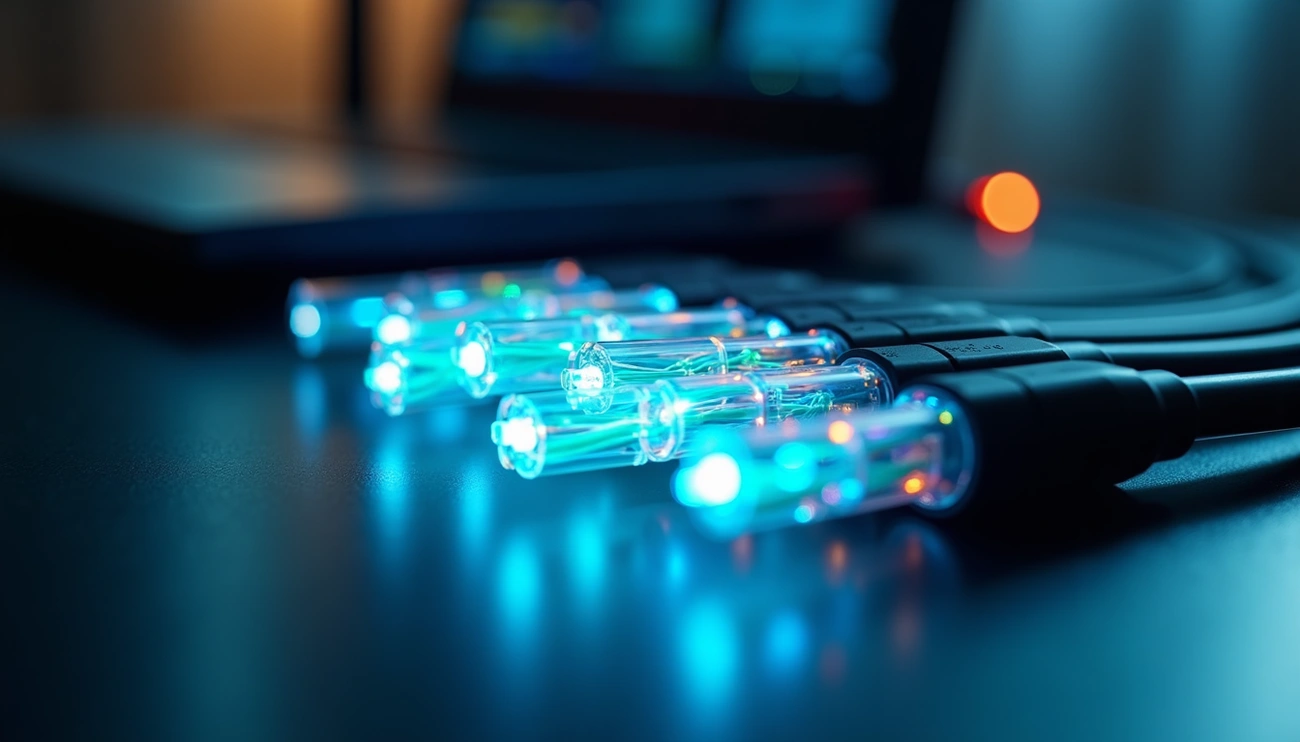
Fiber-optic internet sends data as light pulses through glass or plastic strands, each as thin as a human hair. Unlike cable internet, which uses electrical signals over copper wires, fiber transmits information as light, converted by light-emitting diodes or lasers. Light travels through the fiber cable’s core by total internal reflection, bouncing within the cladding so signals can travel long distances without loss.
An Optical Network Terminal (ONT) receives the light signals and turns them into electrical signals your devices use. Unlike traditional modems, which convert digital data to analog, the ONT simply translates light pulses into usable data.
Fiber comes in two types: single-mode, which has a small core for straight-line light travel over long distances, and multimode, which has a larger core for shorter, less expensive connections. This infrastructure can send data at up to 800 Gbps, although most consumer plans provide speeds of 100 Mbps or more.
Benefits of Fiber Optic Internet vs Other Connection Types
Fiber-optic internet speeds differ from cable and DSL in one significant way: symmetrical performance. Cable connections max out around 1 Gbps download speeds with substantially slower upload speeds. Fiber delivers matching speeds in both directions. A 1 Gig fiber plan provides 1,000 Mbps down and 1,000 Mbps up. Some providers now offer plans up to 5 Gbps, with advanced services delivering up to 50 Gbps.
The reliability advantage stems from the fiber’s physical properties. Underground fiber lines avoid exposure to wind, ice, and falling branches. Fiber transmits light rather than electricity, so electromagnetic interference from nearby electronics or temperature fluctuations doesn’t affect it. Cable and DSL networks struggle with these environmental factors and experience frequent service disruptions.
Performance stays consistent regardless of the network traffic. Cable internet slows during peak hours when neighbors compete for bandwidth. Fiber-optic maintains stable speeds 24/7. If your home has multiple devices connected, the speed will stay consistent.
Energy efficiency sets fiber apart from older technologies. Fiber networks consume up to 70% less energy per gigabit than copper-based systems. Studies show fiber uses three times less energy than DSL and ten times less than 4G access technology. You also have higher security benefits than the old copper cabling. The glass core prevents physical tapping without specialized equipment.
Is Fiber Internet Worth It? Practical Considerations
Availability remains the main practical barrier. Fiber reaches 43% of U.S. households, though this varies by state. Rhode Island leads with 83.2% fiber availability, while Alaska lags at just 13%. Cable internet covers 82-89% of the population, in contrast, and is nearly twice as available.
Costs vary by plan and provider. Entry-level fiber starts at $20–$50 per month, and prices tend to remain stable over time. Some providers, such as AT&T Fiber, do not raise rates after promotions, while many cable providers do.
Professional service is required for installation and takes two to six hours. A technician installs the ONT, runs the cabling, and tests signal strength throughout your home. Someone 18 or older must be present during this process. Fiber-optic wiring has been shown to increase your home’s value by 3% to 14%. Remote workers, gamers, and households with multiple users get the performance they need without any slowdowns. On balance, if fiber serves your address and your household just needs reliable high-speed connectivity, the investment pays off through consistent performance and property value appreciation.
Conclusion
Fiber internet delivers superior performance compared to cable and DSL. The symmetrical speeds and weather-resistant reliability justify the switch for most households. Availability remains the biggest problem. Fiber reaches less than half of U.S. homes.
We recommend making the investment if fiber service is available at your address. You’ll enjoy faster speeds and stable pricing. Your property value will increase. Fiber is the best choice available for households with heavy internet usage, remote workers, and gamers.
Is Fiber Internet Better? | Blog Article | Econo-Tech | All Rights Reserved | 228 Farmingdale Rd. Farmingdale Ny 11735